

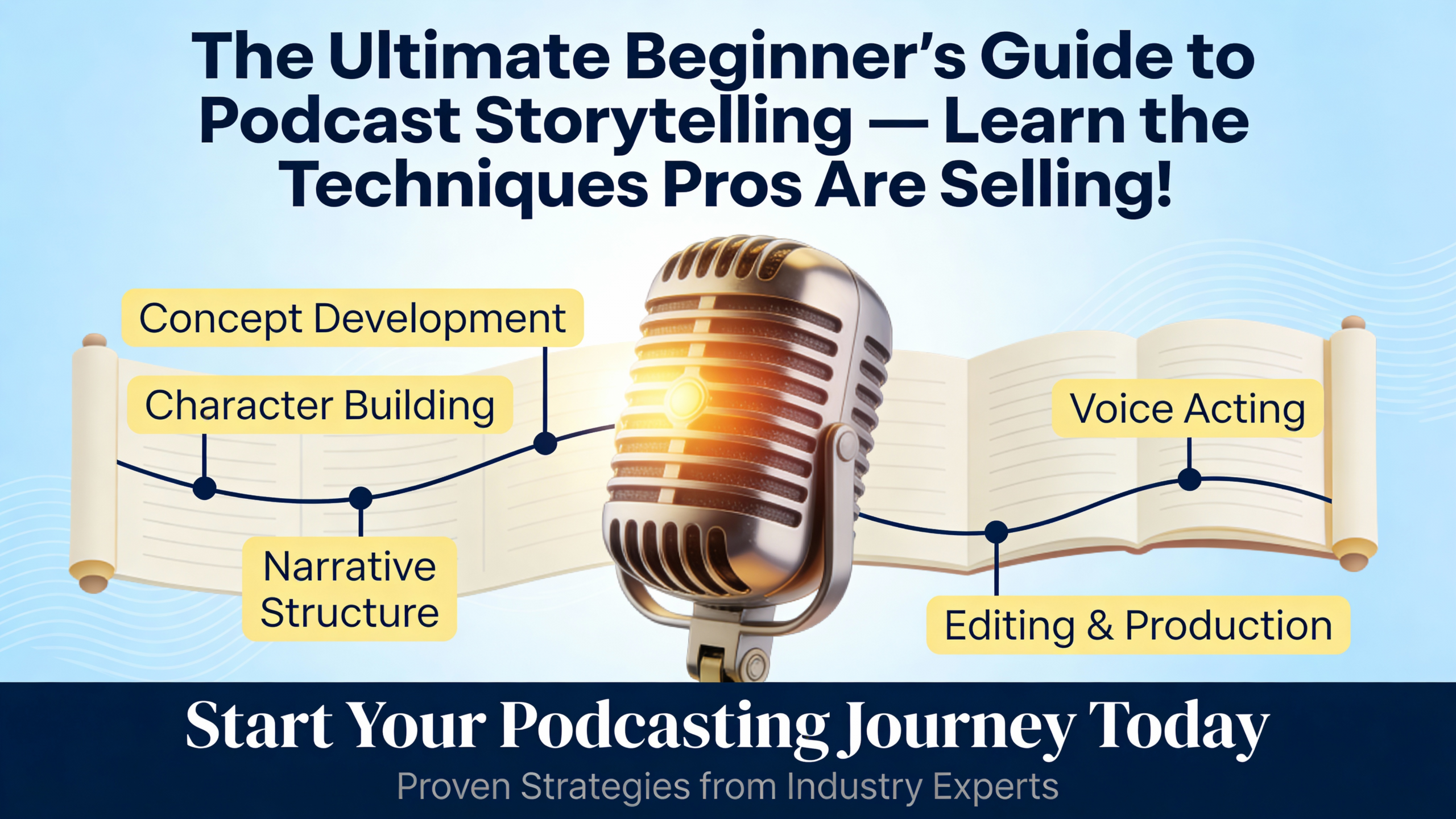
Podcasting has exploded into one of the most powerful formats for sharing ideas, telling stories, and building brands. But while many new podcasters obsess over equipment, hosting platforms, or editing software, the truth is that storytelling is what determines whether your show succeeds or fades away. Great storytelling is what keeps listeners glued to their headphones, following your episodes, and recommending your podcast to others.
The catch? Many seasoned podcasters treat storytelling like a secret weapon — something to package, sell, or turn into a course. But you don’t need to pay for expensive masterclasses to learn the essentials. With the right approach, you can apply the same techniques professionals use to craft compelling stories that listeners can’t turn off.
This complete beginner’s guide will show you how to build narratives that captivate from the first second to the final line. Whether your podcast is interview-based, narrative-driven, educational, or conversational, these foundations will help you create episodes that feel polished, intentional, and emotionally engaging.
Why Storytelling Matters More Than Production Quality
Many new creators believe they must have a high-end microphone, professional editing, or heavy sound design to launch a great podcast. But while good audio quality helps, storytelling is what transforms an episode from background noise into something unforgettable.
Listeners stick around because:
- They want answers.
- They want emotional connection.
- They want to follow a journey.
- They want something that resonates.
Better storytelling increases:
- Retention
- Shares
- Reviews
- Listener loyalty
- Monetization potential
Even simple topics become compelling when framed as stories.
Understanding the Psychology of an Engaging Story
Before diving into techniques, let’s explore why stories work so well. Humans are wired to respond to narrative. Our brains release dopamine when we encounter suspense, curiosity, or emotional tension. Stories help us organize information, remember lessons, and empathize with others.
Great podcast stories rely on these psychological elements:
Curiosity
Listeners stay when they want to know what happens next.
Emotion
This could be humor, fear, hope, embarrassment, surprise, or nostalgia.
Structure
A clear beginning, middle, and end prevent confusion and frustration.
Connection
Your audience must relate to you or the people in your story.
Understanding these principles helps you craft episodes that move people.
The Storytelling Blueprint Pros Use (But Rarely Explain for Free)
Professionals follow a storytelling formula — even if they claim to be improvising. This structure keeps episodes tight, focused, and engaging.
Here’s the blueprint:
1. The Hook (0:00–0:60)
Your first minute must give listeners a reason to stay.
Effective hooks include:
- A surprising confession
- A bold claim
- A question that demands an answer
- A glimpse of the climax
- A short preview of emotional stakes
If you don’t hook them early, they’re gone.
2. The Setup
Introduce:
- Who is involved
- What the situation is
- Why it matters
Keep this concise. The listener should quickly understand what journey they’re joining.
3. Rising Tension
This is where the story becomes alive. Add:
- Conflicts
- Obstacles
- Unexpected turns
- Mistakes and lessons
Tension does NOT require drama — it only requires uncertainty or curiosity.
4. The Climax
The turning point. This is where:
- A realization occurs
- A truth is revealed
- A mystery is solved
- A transformation takes place
This moment should feel impactful.
5. The Resolution
Wrap up the narrative by showing:
- What changed
- What was learned
- Why it matters to the listener
Your resolution is where meaning emerges.
Professionals rely on this structure because it works in every genre.
Choose Your Format: 4 Styles of Storytelling for New Podcasters
Not all podcasts use the same storytelling approach. Choose the one that matches your show’s tone and goals.
1. Narrative Storytelling
Perfect for documentary, fiction, or personal stories.
You guide the listener through a cinematic experience.
2. Conversational Storytelling
Used in co-hosted or interview podcasts.
You shape a story through real-time discussion, anecdotes, and reflections.
3. Educational Storytelling
Useful for business, science, personal development, or tutorials.
You teach through examples, metaphors, and narrative explanations.
4. Hybrid Storytelling
A mix of narration, examples, interviews, and analysis.
Many top podcasts use this format because it’s versatile and dynamic.
Crafting Characters Your Audience Cares About
Great storytelling requires compelling characters — even in nonfiction.
Your “characters” might be:
- You
- A guest
- A client
- Someone you researched
- A fictional persona
To make a character engaging:
- Show their desires and goals
- Reveal their flaws
- Share their emotions
- Let listeners see their choices and consequences
Listeners don’t need perfect people. They need real people.
Using Scenes to Bring Your Story to Life
A common mistake beginners make is presenting information without imagery or emotion. You must create scenes.
A scene is a moment your audience can visualize.
To build a great scene:
- Describe sensory details
- Show movement or action
- Include dialogue when possible
- Reveal internal thoughts
- Highlight conflict
Example of a dull line:
“I was nervous during my first interview.”
Example of a scene:
“My finger hovered over the record button for seven seconds before I finally pressed it. My voice cracked on the first question, and I could hear my heartbeat through the headphones.”
Scenes build immersion — immersion builds loyalty.
The Art of Pacing: How Pros Keep Listeners Engaged
Pacing determines how fast or slow your story feels. Strong pacing is essential for listener retention.
Slow down when:
- The moment is emotional
- A turning point occurs
- You reveal something important
Speed up when:
- Describing actions
- Moving through background details
- Building momentum or excitement
Add natural breaks:
Use segment transitions or short pauses to reset attention.
Pacing is invisible when done well — and distracting when done poorly.
Write for the Ear, Not the Eye
Podcast scripts must sound natural. This is why many professional podcasters rewrite scripts repeatedly until they “feel right” when spoken.
Follow these principles:
- Use short sentences
- Use contractions (“I’m,” “you’re,” “we’ll”)
- Use simple words
- Speak conversationally
- Incorporate rhetorical questions
- Avoid long paragraphs of dense information
Read your script aloud to check flow and tone.
Authenticity: The Secret Ingredient No Course Can Teach
Listeners don’t expect perfection — they expect connection. Authenticity builds trust and credibility.
Show authenticity by:
- Admitting fears or mistakes
- Sharing personal insights
- Being honest about challenges
- Keeping your natural voice and tone
You don’t need a “persona.” You need you, with confidence and vulnerability.
How to Turn Personal Experiences Into Powerful Episodes
Your life is full of stories waiting to be told. The key is knowing how to shape them.
Here’s the process:
1. Start with a moment that matters.
Something that changed you, surprised you, frustrated you, or taught you something.
2. Identify the deeper message.
What does this story say about:
- Growth
- Fear
- Curiosity
- Creativity
- Failure
- Success
3. Add scenes and tension.
Even small events have suspense.
4. Reveal what you learned.
This gives value to the listener.
5. Connect the lesson back to your episode’s theme.
This makes the story feel purposeful, not random.
Techniques Pros Sell in Their Courses — Explained for Free
Here are some storytelling methods often kept behind paywalls:
1. The Curiosity Gap
Pose a question early — but delay the answer.
2. The Loop Method
Start a story → interrupt it → bring it back later.
This keeps listeners hooked.
3. The Rule of Three
Three examples, three beats, three scenes.
It’s a natural rhythm the brain responds to.
4. Microscopic Detail
Zoom in on one small detail to create emotional impact.
5. Strategic Vulnerability
Share just enough personal truth to create connection, without oversharing.
6. Callbacks
Refer back to earlier lines to create cohesion and emotional payoff.
These techniques elevate your storytelling instantly.
The Smartest Way to Practice Storytelling for Podcasts
You can improve faster with intentional practice.
Try:
- Rewriting your favorite podcast episode in your own words
- Turning a daily moment into a 2-minute story
- Recording a short narrative every day
- Analyzing what works in top podcasts
- Practicing cold openings and hooks
The more you practice, the more natural storytelling becomes.
You Don’t Need to Be a Pro — You Need to Start
Storytelling may seem intimidating, but the truth is simple: every great podcaster was once a beginner. What sets successful creators apart is not talent — it’s practice, awareness, and strategy.
By using:
- Strong hooks
- Clear structure
- Emotional tension
- Vivid scenes
- Authentic voice
- Clean pacing
- Purposeful endings
—you can create episodes that feel professional from day one.
Your podcast doesn’t need the highest budget. It needs heart, clarity, and a story worth telling.

Arthur Zani is a podcast storytelling enthusiast who helps beginner podcasters turn simple ideas into engaging audio stories. With a strong focus on clarity, emotion, and listener connection, they share practical tips and insights to help new creators build confidence, improve retention, and tell stories that truly resonate.