

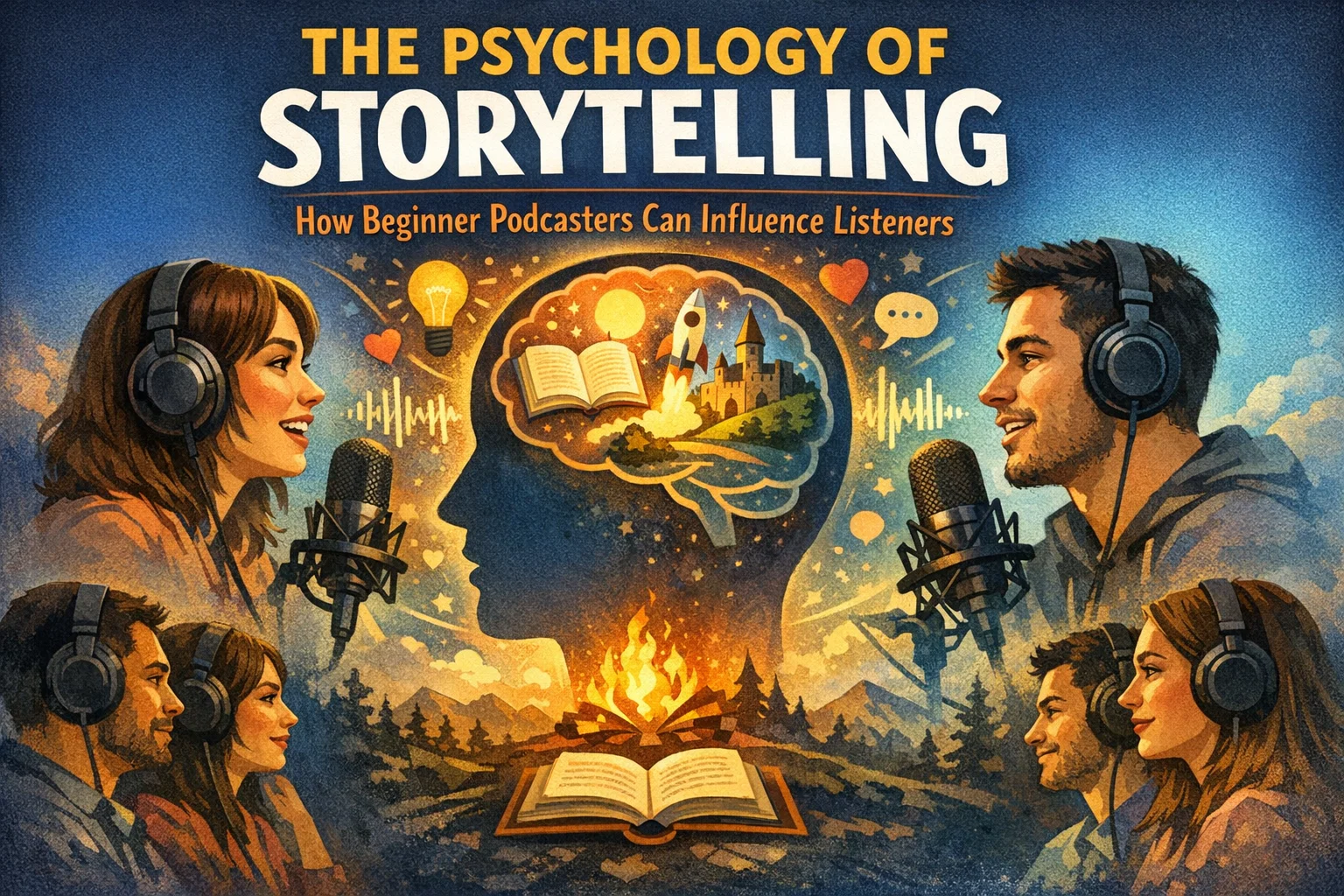
Ever wondered why some podcasts make you feel deeply connected, even if you’ve never met the host? Or why certain episodes linger in your mind long after you’ve hit pause? The secret sauce isn’t fancy microphones or viral marketing—it’s storytelling psychology.
For beginner podcasters, this is great news. You don’t need a massive budget or celebrity guests. You need stories that tap into how the human brain works. Let’s break down how storytelling psychology can help you influence, engage, and genuinely connect with your listeners.
Why Humans Are Wired for Stories
Stories vs. Raw Information
Facts inform, but stories transform. According to research from Princeton University, stories activate multiple areas of the brain, not just the language center. When you tell a story, the listener’s brain syncs with yours—a phenomenon called neural coupling.
👉 Data tells. Stories sell.
The Neuroscience Behind Storytelling
When we hear stories:
- Dopamine increases (attention and motivation)
- Oxytocin is released (trust and empathy)
- Cortisol spikes during tension (focus)
This chemical cocktail is why storytelling is so powerful—and why podcasts feel personal.
What Is Psychological Storytelling?
More Than Entertainment
Psychological storytelling is about guiding emotions intentionally. You’re not just narrating events; you’re shaping how listeners feel, think, and remember.
Mirror Neurons and Empathy
Mirror neurons fire when we hear emotions in someone’s voice. That’s why authentic emotion beats scripted perfection every time. If you feel it, they feel it too.
Podcasting as an Intimate Medium
Why Audio Feels Personal
Podcasts are usually consumed alone—on walks, drives, or late at night. That makes them incredibly intimate. Your voice becomes a companion, not just content.
Spotify and Apple Podcasts have both highlighted how voice-based content builds parasocial relationships, where listeners feel personally connected to hosts.
🔗 Source: Spotify Research
Tone, Pace, and Silence
Silence isn’t empty—it’s powerful. Strategic pauses create anticipation. A calm pace builds trust. A rushed tone breaks immersion.
Think of your podcast like music. Rhythm matters.
The Hero’s Journey for Beginner Podcasters
Simple Story Arcs That Work
You don’t need epic fantasies. Use:
- Problem → Struggle → Insight
- Failure → Lesson → Growth
These arcs mirror real life, which makes them relatable.
Conflict and Resolution
No conflict, no attention. Even small struggles—self-doubt, mistakes, awkward moments—keep listeners hooked because they reflect shared human experiences.
Beginner Podcasters and Influence
Authenticity Beats Polish
Here’s the truth: people trust humans, not perfection. Beginner podcasters often win because they sound real.
Joe Rogan didn’t start polished. Neither did Tim Ferriss or Brené Brown. They started honest.
Vulnerability Builds Authority
Counterintuitive? Maybe. But sharing failures shows confidence. Vulnerability signals credibility, not weakness.
Emotional Triggers in Audio Storytelling
Curiosity Gaps
Open loops keep listeners coming back:
“Something happened that completely changed how I see this…”
Boom. You’re hooked.
Cliffhangers and Habit Formation
End episodes with anticipation. Netflix does this. Podcasts should too. Consistency plus curiosity equals loyalty.
Cognitive Biases Podcasters Can Use (Ethically)
Familiarity Bias
Listeners prefer voices and formats they recognize. That’s why consistent intros, music, and structure matter.
Social Proof
Mentioning listener feedback, reviews, or expert quotes boosts credibility. Humans follow humans.
🔗 Example: Cialdini’s Principles of Influence
Ethics of Influential Storytelling
Manipulation vs Inspiration
Influence isn’t manipulation—unless you hide intent. Ethical storytelling empowers listeners to think, not obey.
Transparency Builds Long-Term Trust
Say why you’re sharing a story. Be upfront about sponsors. Trust compounds over time.
Your Voice Is More Powerful Than You Think
Storytelling isn’t a talent reserved for writers or filmmakers. It’s a human skill, and beginner podcasters already have it.
When you understand the psychology behind stories, you stop chasing downloads and start building relationships. And relationships? That’s where real influence lives.
So hit record. Tell the story. Let your voice do the rest. 🎙️

Arthur Zani is a podcast storytelling enthusiast who helps beginner podcasters turn simple ideas into engaging audio stories. With a strong focus on clarity, emotion, and listener connection, they share practical tips and insights to help new creators build confidence, improve retention, and tell stories that truly resonate.