

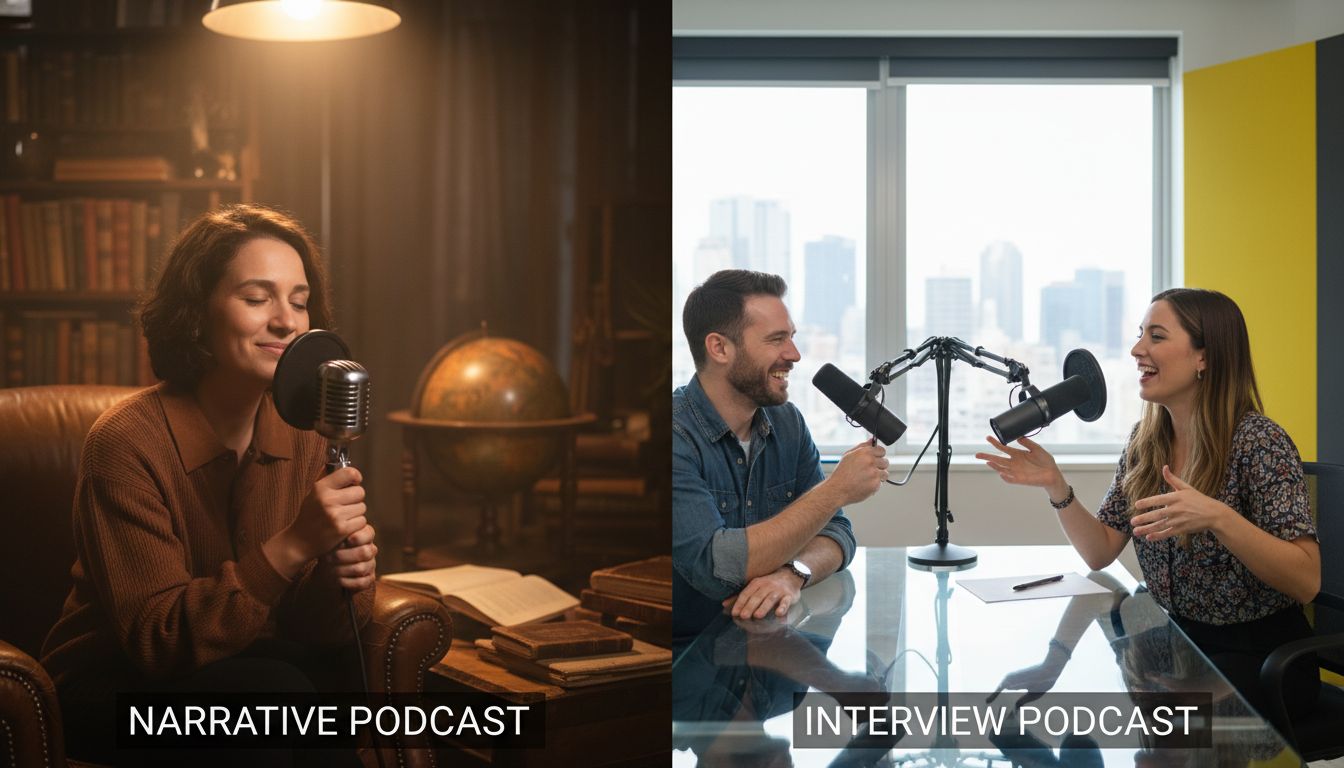
In the burgeoning world of podcasting, creators are constantly seeking the secret sauce to attract and retain listeners. Two dominant formats reign supreme: narrative podcasts and interview podcasts. But which one truly captures a larger audience? This is a question that plagues both seasoned podcasters and newcomers alike. Let’s delve deep into the nuances of each format, analyzing their strengths, weaknesses, and ultimately, determining which one is more likely to garner a larger listenership.
Understanding Narrative Podcasts
Narrative podcasts are akin to audio documentaries or serialized storytelling. They often feature a host guiding the listener through a compelling story, incorporating sound effects, music, and sometimes even voice actors to create an immersive experience. Think of it as a radio drama for the modern age.
Key Characteristics of Narrative Podcasts
- Story-Driven: The central focus is on unfolding a story, whether it’s true crime, historical events, fictional tales, or investigative journalism.
- Immersive Sound Design: Sound effects, music, and ambient noise are used to enhance the listening experience and draw the audience into the narrative.
- Scripted and Produced: Narrative podcasts require meticulous planning, scripting, and post-production editing to ensure a cohesive and engaging final product.
- Host as a Guide: The host serves as a narrator, guiding the listener through the story and providing context and insights.
Advantages of Narrative Podcasts
- High Engagement: A well-crafted narrative can captivate listeners and keep them hooked from beginning to end.
- Strong Storytelling Potential: The format allows for deep dives into complex topics and the exploration of compelling characters and events.
- Potential for Binge-Listening: Serialized narratives encourage listeners to consume multiple episodes in quick succession.
- Establish Authority: Showcasing your expertise through meticulously researched and well-presented narratives can help establish you as an authority in a particular field.
Disadvantages of Narrative Podcasts
- High Production Costs: Creating a high-quality narrative podcast can be expensive, requiring investment in sound equipment, editing software, voice actors, and music licensing.
- Time-Consuming: Researching, writing, recording, and editing a narrative podcast is a time-intensive process.
- Reliance on Storytelling Skills: The success of a narrative podcast hinges on the host’s ability to tell a compelling story.
- Risk of Losing Listeners: If the story is poorly written or the production quality is subpar, listeners may lose interest.
Exploring Interview Podcasts
Interview podcasts, on the other hand, revolve around conversations with guests. The host engages in discussions with experts, thought leaders, or individuals with unique experiences, offering listeners insights and perspectives on a wide range of topics. It’s a format that thrives on personality, expertise, and the dynamic between host and guest.
Key Characteristics of Interview Podcasts
- Guest-Centric: The focus is on the guest and their expertise or experiences.
- Conversational Style: The format relies on natural conversation and spontaneous exchanges between the host and guest.
- Flexibility: Interview podcasts can cover a wide range of topics and adapt to different guest personalities.
- Networking Opportunities: Hosting an interview podcast can provide valuable networking opportunities with influential individuals.
Advantages of Interview Podcasts
- Relatively Low Production Costs: Interview podcasts generally require less investment in sound design and post-production editing compared to narrative podcasts.
- Easier to Produce Regularly: Scheduling and conducting interviews can be less time-consuming than researching and writing a narrative podcast.
- Guest Expertise: Guests bring their own knowledge and insights to the table, enriching the content and providing value to listeners.
- Cross-Promotional Opportunities: Guests can promote the podcast to their own audiences, expanding its reach.
Disadvantages of Interview Podcasts
- Reliance on Guest Availability: The success of an interview podcast depends on the host’s ability to secure interesting and engaging guests.
- Risk of Unengaging Interviews: A poorly conducted interview can be dull and uninformative, leading to listener attrition.
- Potential for Off-Topic Discussions: Interviews can sometimes veer off-topic, losing the focus and potentially alienating listeners.
- Lack of Immersive Storytelling: Interview podcasts typically lack the immersive sound design and storytelling elements of narrative podcasts.
Narrative vs. Interview Podcast: A Head-to-Head Comparison
Now that we’ve examined the characteristics, advantages, and disadvantages of each format, let’s compare them directly to determine which one is more likely to attract a larger audience.
Production Value
Narrative podcasts generally require higher production value than interview podcasts. The use of sound effects, music, and voice actors can create a more immersive and engaging listening experience, but it also adds to the cost and complexity of production. Interview podcasts, on the other hand, can be produced with minimal equipment and editing, making them a more accessible option for aspiring podcasters.
Content Creation
Narrative podcasts demand meticulous planning, research, and scripting. The host must be a skilled storyteller, capable of crafting a compelling narrative that keeps listeners engaged. Interview podcasts, while requiring preparation and research on the guest, rely more on the spontaneity of conversation. The host must be a skilled interviewer, able to ask insightful questions and guide the conversation in a productive direction.
Audience Engagement
Both narrative and interview podcasts can be highly engaging, but in different ways. Narrative podcasts excel at capturing listeners’ attention through immersive storytelling and emotional connection. Interview podcasts engage listeners through the expertise and insights of the guest, as well as the dynamic between the host and guest. The type of engagement that resonates most with listeners will depend on their individual preferences.
Growth Potential
The growth potential of a podcast depends on a variety of factors, including the quality of the content, the effectiveness of the marketing strategy, and the overall appeal of the topic. Narrative podcasts may have a higher potential for viral growth due to their storytelling nature and potential for emotional resonance. Interview podcasts can leverage the audience of their guests for cross-promotion, expanding their reach to new listeners.
Analyzing Listener Preferences: What the Data Says
While anecdotal evidence and personal preferences can offer some insight, let’s look at some data to understand listener preferences. Unfortunately, precise, universally accepted metrics on podcast format popularity are difficult to obtain due to the fragmented nature of the podcasting ecosystem. However, we can analyze trends and available data to draw informed conclusions.
Popular Podcast Charts
Analyzing the top podcast charts across various platforms (Apple Podcasts, Spotify, etc.) reveals a mix of both narrative and interview-based shows. True crime narrative podcasts often dominate the charts, showcasing the power of compelling storytelling. However, interview podcasts featuring celebrities, business leaders, or thought leaders also consistently rank high, demonstrating the appeal of expert insights and engaging conversations.
Genre-Specific Trends
The popularity of different formats can also vary depending on the genre. For example, in the true crime genre, narrative podcasts tend to be more prevalent. In the business and self-help genres, interview podcasts are often more common. Understanding the trends within specific genres can help podcasters tailor their format to the preferences of their target audience.
Listener Surveys and Reviews
Analyzing listener surveys and reviews can provide valuable feedback on what listeners appreciate about different podcast formats. Some listeners may prefer the immersive storytelling of narrative podcasts, while others may prefer the conversational and informative nature of interview podcasts. Paying attention to listener feedback can help podcasters refine their content and format to better meet the needs of their audience.
Case Studies: Successful Narrative and Interview Podcasts
To further illustrate the strengths and weaknesses of each format, let’s examine some successful examples of both narrative and interview podcasts.
Successful Narrative Podcasts
- Serial: This true crime podcast captivated listeners with its in-depth investigation of a murder case. Its serialized format and compelling storytelling kept listeners hooked for weeks.
- S-Town: This narrative podcast explored the life of an eccentric man in rural Alabama. Its unique characters and unexpected plot twists made it a critical and commercial success.
- Dirty John: This true crime podcast told the story of a woman who fell in love with a con man. Its dramatic narrative and shocking revelations kept listeners on the edge of their seats.
Successful Interview Podcasts
- The Joe Rogan Experience: This interview podcast features long-form conversations with a wide range of guests, from comedians and athletes to scientists and politicians. Its diverse topics and engaging host have made it one of the most popular podcasts in the world.
- Armchair Expert with Dax Shepard: This interview podcast features candid conversations with celebrities and experts about their lives and experiences. Its vulnerability and authenticity have resonated with listeners.
- How I Built This with Guy Raz: This interview podcast tells the stories of how successful entrepreneurs built their businesses. Its inspiring narratives and practical advice have made it a valuable resource for aspiring entrepreneurs.
The Deciding Factors: Audience, Topic, and Resources
Ultimately, the choice between a narrative and interview podcast depends on several factors:
Target Audience
Who are you trying to reach? What are their interests and preferences? If your target audience is interested in true crime or historical events, a narrative podcast may be a good choice. If they are interested in business, self-help, or current events, an interview podcast may be more appealing.
Topic
What is the subject matter of your podcast? Some topics lend themselves better to a narrative format, while others are better suited for interviews. For example, a podcast about the history of jazz might be well-suited for a narrative format, while a podcast about current marketing trends might be better suited for interviews with industry experts.
Available Resources
What resources do you have available? Creating a high-quality narrative podcast requires significant investment in time, money, and equipment. Interview podcasts can be produced with fewer resources, making them a more accessible option for aspiring podcasters.
Beyond Format: Crucial Elements for Podcast Success
While the choice between narrative and interview formats is important, it’s crucial to remember that other factors play a significant role in podcast success. These include:
Content Quality
Regardless of the format, the content of your podcast must be high-quality, informative, and engaging. Listeners are more likely to tune in and stay tuned if they find the content valuable and entertaining.
Audio Quality
Poor audio quality can be a major turn-off for listeners. Invest in good quality microphones and editing software to ensure that your podcast sounds professional.
Marketing and Promotion
Even the best podcast will struggle to find an audience without effective marketing and promotion. Utilize social media, email marketing, and other channels to reach your target audience and promote your podcast.
Consistency
Consistency is key to building a loyal audience. Establish a regular publishing schedule and stick to it. Listeners are more likely to subscribe to a podcast that consistently delivers new content.
Future Trends in Podcast Formats (Predictions for 2026)
Looking ahead to 2026, we anticipate several evolving trends in podcast formats that will impact listener engagement and preferences:
- Increased Use of Immersive Audio: Binaural audio and spatial audio technologies will become more prevalent, creating even more immersive and engaging listening experiences, particularly in narrative podcasts.
- AI-Powered Content Creation: AI tools will assist with tasks such as scriptwriting, audio editing, and even generating personalized content recommendations for listeners.
- Interactive Podcasts: Podcasts will become more interactive, allowing listeners to participate in polls, quizzes, and live Q&A sessions with hosts and guests.
- Niche Specialization: The podcasting landscape will become even more niche-focused, with podcasts catering to highly specific interests and demographics.
- Hybrid Formats: We’ll see more podcasts blending elements of narrative and interview formats to create unique and engaging listening experiences.
Conclusion: Which Format Reigns Supreme?
So, which format gets more listeners: narrative or interview? There’s no definitive answer. The “winning” format depends heavily on your target audience, the topic you’re covering, and the resources you have available. Both narrative and interview podcasts have the potential to attract a large audience if they are well-produced, engaging, and effectively marketed.
Ultimately, the most important thing is to create a podcast that you are passionate about and that provides value to your listeners. Experiment with different formats, analyze your audience’s feedback, and adapt your approach as needed. With dedication and creativity, you can build a successful podcast that resonates with listeners and achieves your goals.
Frequently Asked Questions (FAQ)
1. What are the key differences between narrative and interview podcasts?
Narrative podcasts focus on storytelling, using scripts, sound effects, and music to create an immersive experience. Interview podcasts center around conversations with guests, offering insights and expertise on various topics. The former is more produced and scripted, while the latter relies on spontaneity and conversation.
2. Which podcast format is easier to start for beginners?
Interview podcasts are generally easier for beginners due to lower production costs and less intensive scripting requirements. Securing interesting guests and conducting engaging interviews can be more manageable than crafting a compelling narrative from scratch.
3. How can I improve the audio quality of my podcast?
Invest in a good quality microphone, record in a quiet environment, and use audio editing software to remove background noise and improve clarity. Experiment with different recording techniques to find what works best for your voice and equipment.
4. What are some effective ways to promote my podcast?
Utilize social media platforms, create engaging content, and interact with your audience. Consider guest appearances on other podcasts, cross-promotion with relevant businesses, and email marketing to reach a wider audience. Consistency in posting and engaging with your audience is key.
5. How do I choose the right format for my podcast idea?
Consider your target audience, the subject matter, and your available resources. If you have a compelling story to tell and the resources to produce it, a narrative podcast might be ideal. If you’re passionate about interviewing experts and sharing their insights, an interview podcast could be a better fit. Experiment and adapt based on listener feedback.

Arthur Zani is a podcast storytelling enthusiast who helps beginner podcasters turn simple ideas into engaging audio stories. With a strong focus on clarity, emotion, and listener connection, they share practical tips and insights to help new creators build confidence, improve retention, and tell stories that truly resonate.