

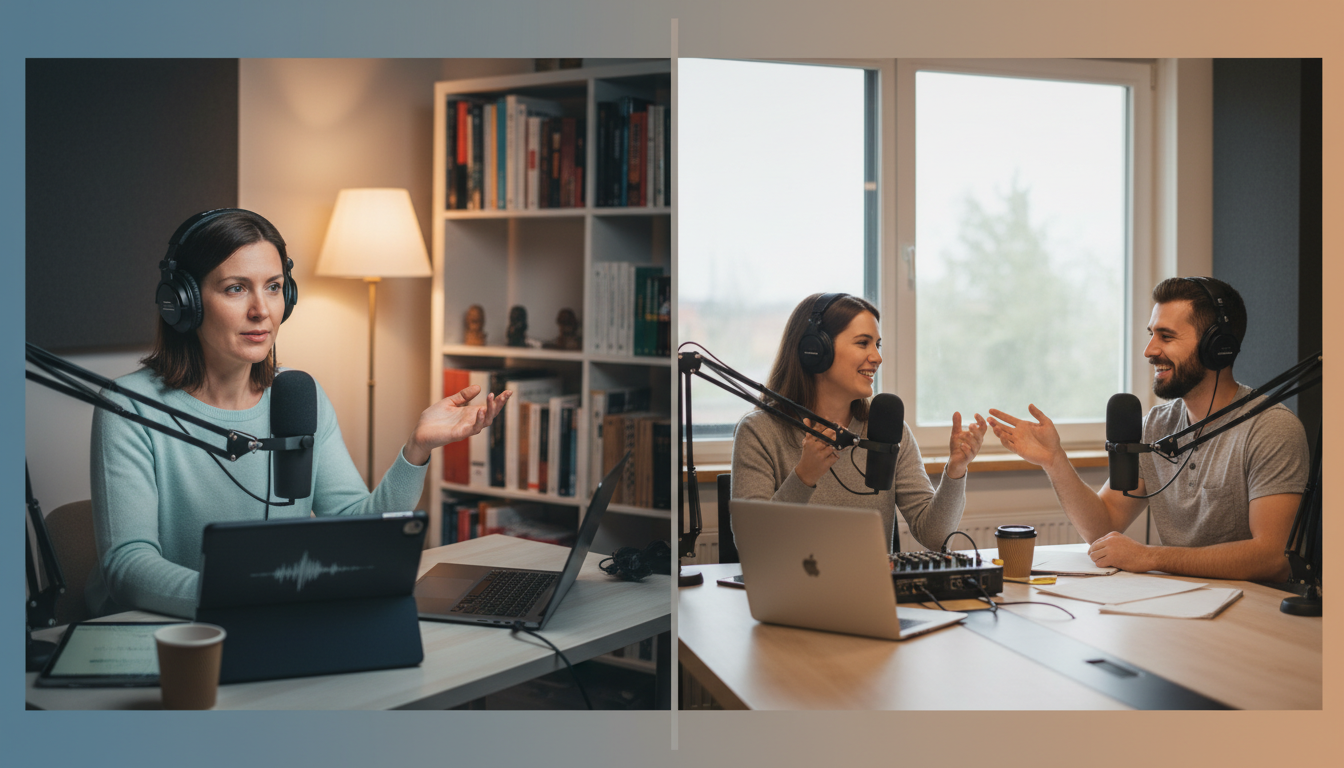
Solo Podcast vs. Co-Host Format: Which One Should You Choose?
Starting a podcast can be an exciting venture, but one of the first decisions you’ll need to make is the format. Will you go it alone with a solo podcast, or will you team up with a co-host? Both formats have their own unique advantages and disadvantages, and the best choice for you will depend on your personality, your goals, and the kind of content you want to create. In this article, we will delve into the nuances of the solo podcast vs. co-host format, providing you with a comprehensive guide to help you make the right decision.
Understanding the Solo Podcast Format
A solo podcast, as the name suggests, is a podcast hosted by a single individual. You are the sole voice, the driving force behind the content, and the one responsible for every aspect of the show. This format offers a great deal of control and flexibility, but it also comes with its own set of challenges.
Advantages of a Solo Podcast
- Complete Control: You have complete creative control over the content, the format, and the direction of your podcast. There’s no need to compromise or negotiate with anyone else.
- Flexibility: You can record episodes whenever and wherever you want, without having to coordinate schedules with a co-host.
- Personal Branding: A solo podcast is a great way to build your personal brand and establish yourself as an expert in your field.
- Cost-Effective: You only need to invest in your own equipment and resources, which can be more budget-friendly than splitting costs with a co-host.
- Faster Production: Decision-making is quicker, and the production process is streamlined since you don’t need to wait for input or approval from another person.
Disadvantages of a Solo Podcast
- Higher Workload: You are responsible for everything, from brainstorming ideas to editing the audio. This can be a significant time commitment.
- Potential for Burnout: The pressure of consistently creating engaging content on your own can lead to burnout.
- Limited Perspectives: You only have your own perspective to offer, which can limit the depth and breadth of your discussions.
- Less Engaging for Some Listeners: Some listeners may find solo podcasts less engaging than those with multiple hosts, as the conversation can be less dynamic.
- Difficulty Maintaining Consistency: Life happens, and it can be challenging to maintain a consistent recording schedule when you’re solely responsible.
When to Choose a Solo Podcast
A solo podcast might be the right choice for you if:
- You have a clear vision for your podcast and a strong desire to maintain complete control.
- You are comfortable speaking on your own and have a lot to say on your chosen topic.
- You have the time and resources to dedicate to all aspects of podcast production.
- You want to build your personal brand and establish yourself as an expert in your field.
Understanding the Co-Host Podcast Format
A co-host podcast involves two or more individuals sharing the hosting duties. This format can lead to lively discussions, diverse perspectives, and a more dynamic listening experience. However, it also requires strong communication, collaboration, and a willingness to compromise.
Advantages of a Co-Host Podcast
- Diverse Perspectives: Co-hosts bring different backgrounds, experiences, and viewpoints to the table, enriching the conversation and providing listeners with a more well-rounded perspective.
- Shared Workload: The responsibilities of podcast production are shared between co-hosts, reducing the burden on any one individual.
- Increased Engagement: The dynamic between co-hosts can be more engaging for listeners, leading to a more entertaining and enjoyable experience.
- Networking Opportunities: Co-hosting can expand your network and introduce you to new audiences through your co-host’s connections.
- Accountability: Having a co-host can help you stay motivated and accountable, making it easier to maintain a consistent recording schedule.
Disadvantages of a Co-Host Podcast
- Compromise Required: You will need to compromise on content, format, and other aspects of the podcast, which can sometimes lead to disagreements.
- Scheduling Challenges: Coordinating schedules with a co-host can be difficult, especially if you have busy lives.
- Potential for Conflict: Differences in opinion or communication styles can lead to conflict between co-hosts.
- Shared Control: You will have to share control over the podcast with your co-host, which may not be ideal if you prefer to be in charge.
- Financial Considerations: You will need to agree on how to split revenue and expenses with your co-host.
When to Choose a Co-Host Podcast
A co-host podcast might be the right choice for you if:
- You enjoy collaborating with others and value diverse perspectives.
- You want to share the workload of podcast production.
- You believe that a co-host will make your podcast more engaging and entertaining.
- You are willing to compromise and work through disagreements.
Key Considerations When Choosing a Format
Before making a decision, consider these key factors:
Your Personality and Strengths
Are you an introvert or an extrovert? Do you prefer working alone or in a team? Are you comfortable speaking on your own, or do you thrive on conversation? Understanding your personality and strengths will help you determine which format is a better fit.
Your Goals for the Podcast
What do you hope to achieve with your podcast? Are you trying to build your personal brand, promote your business, or simply share your passion with the world? Your goals will influence the format that is most likely to help you succeed.
Your Content and Target Audience
What kind of content do you plan to create? Is it best suited for a solo presentation, or would it benefit from multiple perspectives? Who is your target audience, and what kind of format would they prefer?
Your Time and Resources
How much time and resources are you willing to dedicate to your podcast? A solo podcast may require more time from you individually, but a co-host podcast requires coordinating schedules and dividing responsibilities. Consider what is feasible for you.
Comparing the Production Process
The production process differs significantly between solo and co-hosted podcasts.
Solo Podcast Production
In a solo podcast, you’re responsible for:
- Idea Generation: Coming up with topics and episode ideas.
- Research: Gathering information and preparing your talking points.
- Recording: Setting up your equipment and recording the episode.
- Editing: Removing mistakes, adding intro/outro music, and polishing the audio.
- Promotion: Marketing your podcast on social media and other platforms.
Co-Host Podcast Production
In a co-hosted podcast, these tasks are typically divided:
- Collaborative Planning: Brainstorming ideas and planning episodes together.
- Shared Research: Dividing research responsibilities.
- Joint Recording: Recording the episode together, either in person or remotely.
- Collaborative Editing: One person may handle editing, or the task may be shared.
- Joint Promotion: Promoting the podcast together through various channels.
Monetization Strategies for Each Format
Both solo and co-hosted podcasts can be monetized in various ways. Here are some common strategies:
Monetizing a Solo Podcast
- Advertising: Selling ad space to sponsors.
- Affiliate Marketing: Promoting products or services and earning a commission on sales.
- Selling Merchandise: Creating and selling branded merchandise.
- Offering Premium Content: Providing exclusive content to paying subscribers.
- Donations: Accepting donations from listeners through platforms like Patreon.
Monetizing a Co-Host Podcast
- Advertising: Selling ad space, with revenue split between co-hosts.
- Affiliate Marketing: Sharing affiliate links and splitting commissions.
- Joint Ventures: Collaborating with other businesses or podcasters.
- Live Events: Hosting live podcast recordings or workshops.
- Crowdfunding: Launching a crowdfunding campaign to support the podcast.
Examples of Successful Solo and Co-Host Podcasts
To give you a better idea of what each format can look like, here are some examples of successful podcasts:
Successful Solo Podcasts
- The Tim Ferriss Show: Hosted by Tim Ferriss, this podcast features long-form interviews with experts in various fields.
- The Daily: Hosted by Michael Barbaro, this podcast provides in-depth news coverage from The New York Times.
- Stuff You Should Know: While now also featuring a co-host, it started with Josh Clark educating listeners on diverse topics.
Successful Co-Host Podcasts
- My Favorite Murder: Hosted by Karen Kilgariff and Georgia Hardstark, this podcast discusses true crime stories with humor and empathy.
- Call Her Daddy: Initially hosted by Alexandra Cooper and Sofia Franklyn, and now solely by Alexandra Cooper, this podcast focuses on sex and relationship advice.
- The Joe Rogan Experience: While primarily hosted by Joe Rogan, it often features guests for in-depth conversations.
Technical Considerations for Each Format
The technical aspects of podcasting can differ slightly depending on whether you choose a solo or co-host format.
Technical Setup for a Solo Podcast
For a solo podcast, you’ll typically need:
- A Good Microphone: A USB microphone like the Blue Yeti or Rode NT-USB Mini is a good starting point.
- Recording Software: Audacity (free) or Adobe Audition (paid) for recording and editing audio.
- Headphones: To monitor your audio and prevent feedback.
- A Quiet Recording Environment: To minimize background noise.
Technical Setup for a Co-Host Podcast
For a co-host podcast, you’ll need:
- Microphones for Each Host: Each host will need their own microphone.
- A Mixer or Audio Interface: To connect multiple microphones to your computer.
- Recording Software: Software that supports multi-track recording, such as Adobe Audition or GarageBand.
- Remote Recording Software: If recording remotely, software like Zoom, SquadCast, or Riverside.fm.
- Headphones for Each Host: To monitor audio and prevent feedback.
Legal and Ethical Considerations
Regardless of the format you choose, it’s important to be aware of legal and ethical considerations.
Legal Considerations
- Copyright: Be careful not to use copyrighted music or other materials without permission.
- Fair Use: Understand the fair use doctrine and how it applies to your podcast.
- Privacy: Respect the privacy of your guests and listeners.
- Terms and Conditions: If running contests or promotions, ensure you comply with all applicable laws and regulations.
Ethical Considerations
- Accuracy: Strive to provide accurate and truthful information.
- Transparency: Be transparent about your affiliations and any potential conflicts of interest.
- Respect: Treat your guests and listeners with respect, even if you disagree with them.
- Responsibility: Take responsibility for the content you create and the impact it may have on others.
Future Trends in Podcasting (2026)
Looking ahead to 2026, several trends are expected to shape the podcasting landscape:
- Increased Personalization: AI-powered tools will enable more personalized listening experiences, tailoring content recommendations to individual preferences.
- Interactive Podcasting: Podcasts will become more interactive, with features like live Q&A sessions, polls, and chat rooms.
- Video Podcasting: Video podcasts will continue to grow in popularity, offering a more immersive and engaging experience for viewers.
- Subscription Models: Subscription-based podcast platforms will become more prevalent, providing creators with a sustainable revenue stream.
- AI-Generated Content: AI may assist in content creation, such as generating show notes, transcripts, or even entire episodes. However, human creativity and authenticity will remain crucial.
Making the Final Decision
Choosing between a solo podcast vs. co-host format is a personal decision that depends on your unique circumstances. Weigh the advantages and disadvantages of each format carefully, consider your personality and goals, and don’t be afraid to experiment. You can always start with one format and switch to another later if you find that it’s not working for you.
Conclusion
Ultimately, the most important thing is to create a podcast that you are passionate about and that provides value to your listeners. Whether you choose to go it alone or team up with a co-host, the key to success is consistency, quality content, and a genuine connection with your audience. Consider all factors discussed, and remember that the best choice is the one that aligns with your personal and professional goals. Good luck on your podcasting journey!
FAQ – Solo Podcast vs. Co-Host Format
1. Is it easier to start a solo podcast or a co-hosted one?
A solo podcast can be easier to start in terms of logistics since you don’t need to coordinate schedules or share creative control. However, it requires more individual effort in content creation and production. A co-hosted podcast shares the workload but demands effective communication and compromise.
2. Can I switch from a solo podcast to a co-hosted format later on?
Yes, you can. Many podcasters start solo and later introduce a co-host to bring in new perspectives or share the workload. It’s crucial to communicate the change to your audience and ensure the new dynamic aligns with their preferences.
3. Does a co-host podcast automatically mean more listeners?
Not necessarily. A co-host can broaden your audience by tapping into their existing network, but the quality of content and the chemistry between hosts are more significant factors in attracting and retaining listeners.
4. What if my co-host and I disagree on the podcast’s direction?
Disagreements are normal in co-hosted podcasts. Establish clear roles, communication protocols, and decision-making processes from the outset. Consider having a pre-agreed method for resolving conflicts, such as majority vote or seeking a third-party opinion.
5. How do I find a suitable co-host for my podcast?
Look for someone who shares your passion for the topic, has complementary skills, and possesses good communication abilities. Consider people within your network, industry colleagues, or even active listeners who demonstrate enthusiasm and knowledge. A trial episode can help assess compatibility.

Arthur Zani is a podcast storytelling enthusiast who helps beginner podcasters turn simple ideas into engaging audio stories. With a strong focus on clarity, emotion, and listener connection, they share practical tips and insights to help new creators build confidence, improve retention, and tell stories that truly resonate.