

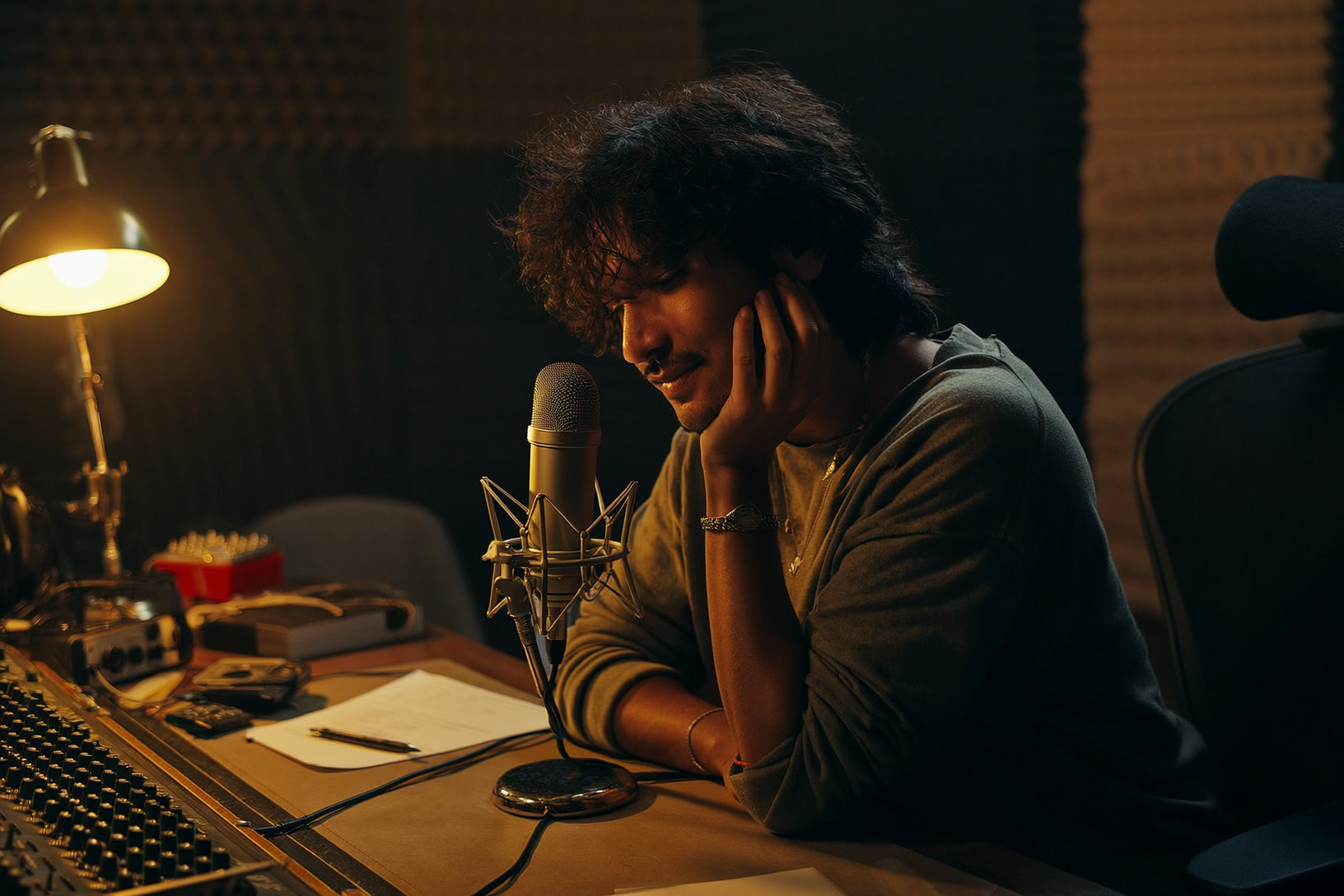
In audio, the listener’s imagination is your most powerful tool. Unlike film, where everything is shown, podcasting allows you to create a world inside someone’s head—a world custom-built by their own memories and feelings. This is the essence of Immersive Storytelling.
Unfortunately, most podcasts sound like conversations recorded in a vacuum. They fail to leverage the one element that separates audio from text: Sound.
An immersive podcast doesn’t just deliver information; it delivers an experience. It makes the listener feel like they are sitting in the room with the guest, walking down the street with the narrator, or standing on the edge of the cliff you are describing.1 This level of engagement dramatically boosts retention and turns casual listeners into devoted fans.
This article outlines 10 expert tips—from scripting techniques to production hacks—to transform your audio from passive listening into an active, captivating journey.
Part 1: Scripting and Performance Hacks
Immersiveness starts with the words you choose and the way you deliver them.
1. The Principle of “Specificity Sells”
Vague language keeps the listener at a distance. Specificity pulls them into the scene.
- Non-Immersive: “The place we went to was dangerous.”
- Immersive: “The air in the alley smelled like stale beer and exhaust. I could hear the scraping sound of the dumpster lid every time the wind blew, and the streetlights flickered, bathing the walls in an unsettling yellow hue.”
The Hack: Before you write a scene, list out the five senses (sight, sound, smell, taste, touch).2 Even if you can only convey the sound in the audio, thinking about the other senses will make your descriptions richer and more visceral.
2. Use Active, Not Passive, Voice
Passive voice is flat and academic. Active voice creates immediate action and immediacy.3
- Passive: “The door was opened by the wind.” (The action is happening to the subject.)4
- Active: “The wind tore the door open.” (The action is happening now.)
The Hack: Constantly check your script for the verb “to be” (is, was, were, been). If you can replace it with a strong action verb (shoved, tore, whispered, staggered), your story will feel more dynamic.
3. The Near-Mic Whisper (The ASMR Effect)
When a podcaster speaks too loud or in a flat tone, the sound wave can feel aggressive in headphones. To create intimacy, you need contrast.
The Hack: Use volume and proximity to the microphone to signal intimacy or a secret.
If you are about to share a vulnerable detail or a shocking fact, lean slightly closer to the mic and drop your volume to a conversational, near-whisper level. This forces the listener to lean in mentally, engaging their attention immediately.
4. Talk in the Present Tense (Immediacy)
If you are telling a personal anecdote, switching to the present tense can trick the listener’s brain into experiencing the event as if it’s happening right now.
- Past Tense: “I was driving down the road when I saw the light.” (It’s over.)
- Present Tense: “I’m driving down the road. The sun is setting fast, and suddenly, I see the flash of red light ahead. My stomach drops.” (You are taking them on the ride.)
The Hack: Use present-tense verbs to narrate critical moments of tension or action.
Part 2: Production and Sound Design Hacks
Sound is 50% of your story. Use it intentionally.
5. Layering Soundscapes (The F**oley Effect)
Do not just rely on ambient music. Use specific, recognizable sound effects (Foley) to paint the environment.5
- Non-Immersive: “She walked into the coffee shop to meet him.”
- Immersive: Layer the sounds: The muffled chink of ceramic cups, the hiss of the espresso machine, the gentle patter of rain outside the window.
The Hack: Use subtlety. The soundscape should support the story, not distract from it. Keep sound effects low in the mix so the listener hears them subconsciously. Your voice should always remain the foreground element.
6. Stereo Panning for Character Placement
In a well-produced audio drama or a narrative interview, you can use the stereo field (left and right channels) to place characters in space.
The Hack: If you are narrating a conversation between two people in a car:
- Pan the Narrator’s voice slightly to the center-right.
- Pan the Dialogue of the person sitting next to the Narrator slightly to the left.
This simple technique grounds the listener in the scene, giving them a physical sense of the environment and making the dialogue feel less abstract.
7. The Contrast Principle (Silence and Noise)
Constant noise is tiring. Constant silence is boring. Immersiveness comes from the sudden, powerful contrast.
The Hack: Follow Hack #8 from the previous article (The Power of Silence). Build a noisy scene (e.g., a chaotic market) and then cut to absolute, pin-drop silence just before a major reveal. The sudden cessation of sound creates dramatic tension and forces the listener’s focus back onto the voice.
8. Use Music as an Emotional Undercurrent
Music should not just be background noise; it should be a character that signals emotional shifts.
- Avoid: Upbeat, generic background music that never changes.
- Use: Subtly changing scores. When the story turns sad, the music should drop to a minor key. When the narrator feels triumphant, the score should swell briefly before settling back down.
The Hack: The music should be so low in the mix that the listener doesn’t consciously notice it until it’s gone. If they say, “I love your music,” it’s too loud. If they say, “That episode felt really intense,” the music did its job.
Part 3: Structure and Listener Engagement
9. The “You Are There” Framing Device
In narrative podcasting, the host often frames the story, but an immersive host takes the listener with them.6
The Hack: Use language that places the listener in the scene with you.
- Instead of: “I went to the mountain and saw the view.”
- Try: “Let’s take a moment. Close your eyes. We are standing on that ledge now. The air is thin, and the clouds are moving right beneath our feet.”
This breaks the invisible wall between the host and the audience, turning listening into shared visualization.
10. The Narrative Detour (The Foreshadowed Element)
Good stories use foreshadowing, where a seemingly random detail early in the story becomes critical later.7 This technique rewards the attentive listener.
The Hack: Drop a small, seemingly insignificant detail early on that will be crucial to the climax.
- Example: In a mystery episode, mention the “blue umbrella” the character casually left behind. Don’t mention it again until the climax, when the blue umbrella becomes the key piece of evidence.
When the detail reappears, the listener thinks, “Aha! I remember that!” This makes them feel smart, engaged, and invested in the outcome.
The Immersive Mindset
Creating an immersive podcast requires discipline and attention to detail. It means moving beyond merely reporting facts and embracing the role of an audio storyteller.
It asks you to ask two questions for every beat of your script:
- What am I trying to make the listener feel right now?
- What does this scene sound like?
If you treat your sound design like a character, your descriptions like poetry, and your voice like an intimate secret, you will move past the noise of the crowded podcast market and create something truly captivating. Start small. For your next episode, focus only on implementing Hack #5 (Layering Soundscapes). The results will speak (and sound) for themselves.

Arthur Zani is a podcast storytelling enthusiast who helps beginner podcasters turn simple ideas into engaging audio stories. With a strong focus on clarity, emotion, and listener connection, they share practical tips and insights to help new creators build confidence, improve retention, and tell stories that truly resonate.